Desert Land Investments in the Negev: Emerging Opportunities
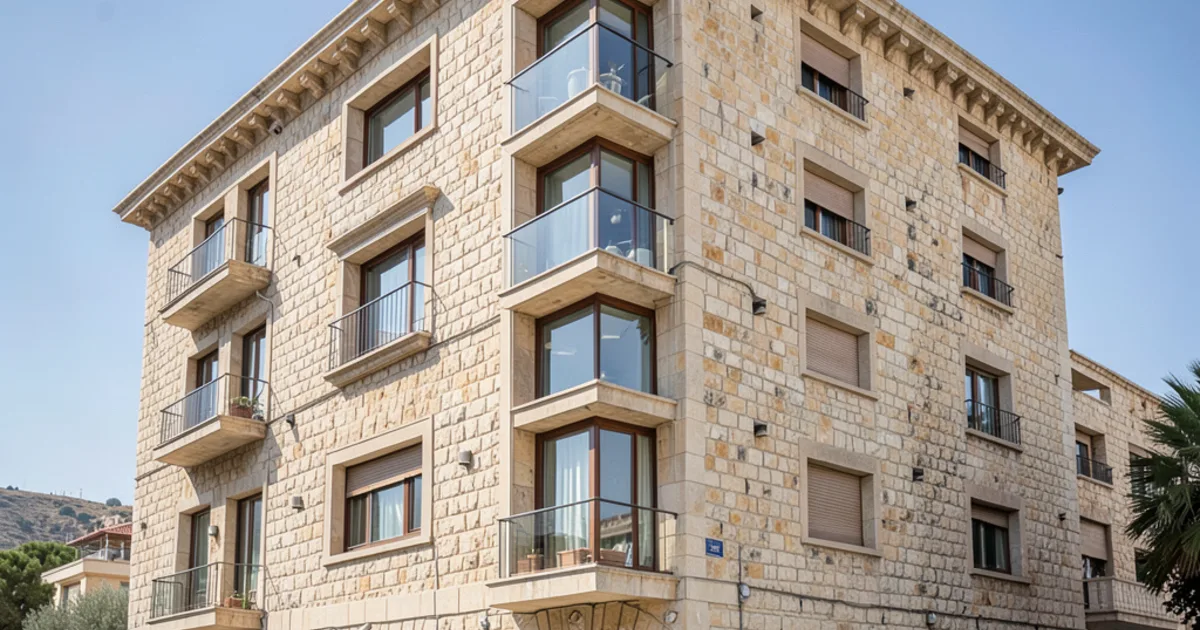
The Negev region, traditionally viewed as an arid frontier, is currently undergoing a profound economic and structural transformation. As Israel seeks to decentralize its population and industrial hubs away from the crowded center, the southern desert has emerged as a primary zone for strategic expansion. For investors and future homeowners, this shift represents a unique window of opportunity to acquire land in a region poised for significant long-term appreciation. This guide provides a deep dive into the complexities, legalities, and strategic considerations of investing in the Negev.
Quick answer: The Negev region offers emerging opportunities for desert land investments due to its strategic location and potential for development. Prospective buyers should focus on areas with clear infrastructure plans and legal clarity to maximize long-term value.
- The Strategic Shift: Why the Negev is Moving to the Forefront
- Identifying Investment Archetypes: Residential, Agricultural, and Commercial
- Navigating the Legal Landscape: The Importance of the Tabu
- Understanding Zoning and the Planning Process
- Financial Realities: Taxes, Mortgages, and Hidden Costs
- Infrastructure: The Backbone of Desert Development
- Building Your Dream: From Permit to Construction
- Strategic Approaches: Holding vs. Developing
- Mitigating Risks in a Frontier Market
- The Importance of Local Expertise and Professional Networks
- Conclusion: Preparing for the Future of the South
The Strategic Shift: Why the Negev is Moving to the Forefront
For many decades, the economic heart of Israel has been concentrated in the coastal plain, leading to high demand and even higher prices in the center. This concentration has created a pressing need for the government to find ways to distribute the population and economic activity more broadly. The Negev, with its vast available territory, has become the cornerstone of this national decentralization strategy. By investing in the south, the state aims to create a more balanced and resilient national economy.
This shift is not merely a political aspiration but is backed by significant infrastructure and institutional investments. The expansion of major southern cities and the development of new industrial zones are part of a broader plan to integrate the desert into the national fabric. As new transportation networks and high-tech corridors are established, the accessibility of the Negev increases. This improved connectivity is a fundamental driver for land value appreciation over time.
Investors are increasingly looking toward the Negev as a way to hedge against the saturation of the central markets. While the center offers stability, the south offers a different kind of potential rooted in growth and development. The movement of academic institutions, research centers, and government offices into the southern region acts as a magnet for a new demographic. This influx of people and businesses creates a ripple effect that benefits landholders in the surrounding areas.
- Decentralization of economic activity from the center to the periphery.
- Expansion of educational and research hubs in southern cities.
- Development of new logistical and high-tech corridors.
Identifying Investment Archetypes: Residential, Agricultural, and Commercial
Before committing capital, an investor must first decide on their specific objective within the Negev market. The most common path is residential land acquisition, which involves purchasing plots intended for the construction of private homes. This path is often chosen by those looking to build a permanent residence or by developers looking to create small residential communities. Such investments are heavily dependent on local municipal zoning and the availability of utilities.
Agricultural land represents a different category, often found in the vicinity of established kibbutzim or moshavim. Investing in agricultural land can be a way to hold large tracts of territory, but it requires a deep understanding of land use laws and water rights. Some investors use agricultural land for long-term appreciation, while others seek to develop boutique agro-tourism projects. However, the transition from agricultural to residential use is a complex and lengthy legal process.
Commercial and industrial land investments focus on the growing demand for logistics, warehousing, and manufacturing space. As the southern corridor develops, the need for efficient storage and distribution centers near major highways becomes critical. This type of investment typically requires larger capital outlays and a more sophisticated understanding of industrial zoning. Commercial land often provides different cash-flow opportunities compared to residential or agricultural plots.
- Residential: Focused on private homes and small-scale development.
- Agricultural: Often tied to kibbutzim/moshavim, focusing on land use and water rights.
- Commercial/Industrial: Aimed at logistics, warehousing, and manufacturing.
Navigating the Legal Landscape: The Importance of the Tabu
In Israel, the legal certainty of land ownership is anchored in the Tabu, the official land registry. Before any transaction takes place, it is absolutely vital to verify that the seller is the true owner and that the land is correctly registered. A thorough search in the Tabu will reveal if there are any existing liens, mortgages, or legal encumbrances on the property. Relying on a verbal agreement or unofficial documentation is a risk that no professional investor should ever take.
The process of transferring ownership is formalized through a binding memorandum, often referred to as a contract of sale. This document must be drafted with precision by a legal professional to ensure that all terms, conditions, and contingencies are clearly defined. The memorandum serves as the legal backbone of the transaction, outlining the price, the timeline for transfer, and the responsibilities of both parties. Failing to address specific clauses regarding zoning or utility access can lead to protracted legal disputes.
It is also important to understand the different types of land ownership in Israel, including state land versus private land. Some land in the Negev may be managed by the Israel Land Authority, which involves different leasing structures rather than outright ownership. Understanding whether you are buying a title or a long-term lease is fundamental to your long-term strategy. Always ensure your legal counsel performs a complete 'due diligence' report on the land's status.
- Verify ownership through the official Tabu land registry.
- Ensure all liens or encumbrances are identified and cleared.
- Draft a comprehensive binding memorandum with professional legal assistance.
Understanding Zoning and the Planning Process
Zoning is perhaps the most critical factor determining the value and utility of any piece of land in the Negev. Every plot is governed by a local master plan and specific zoning regulations that dictate what can be built and how. A piece of land might be beautiful and expansive, but if it is zoned as 'green space' or 'protected nature reserve,' its development potential is virtually zero. Therefore, checking the current zoning status with the local municipality is a mandatory step.
The process of changing zoning, known as rezoning, is a significant undertaking that can take years to complete. This involves submitting proposals to the relevant planning committees and navigating various layers of bureaucratic approval. While successful rezoning can lead to massive increases in land value, it is a high-risk, high-reward endeavor. Investors must account for the uncertainty of these timelines when calculating their expected return on investment.
Beyond simple residential or commercial designations, one must also look at 'density' and 'building rights.' Even within a residential zone, the number of units allowed to be built on a plot or the total square footage permitted can vary significantly. These factors are determined by the local planning authority and are essential for any developer's financial modeling. Always consult the local municipality's planning department to understand the specific constraints of your target area.
- Confirm current zoning via the local municipality.
- Evaluate the potential for rezoning and the associated risks.
- Analyze building rights, density, and height restrictions.
Financial Realities: Taxes, Mortgages, and Hidden Costs
Real estate transactions in Israel involve several layers of taxation that can significantly impact your net profit. The first is Mas Rekhisha, or purchase tax, which is calculated based on the property value and the buyer's status. For an investor, the rates for Mas Rekhisha are generally higher than those for a first-time homebuyer. It is essential to factor this cost into your initial budget to avoid unexpected capital shortfalls.
When you eventually decide to sell your land or property, you will likely encounter Mas Shevah, also known as capital gains tax. This tax is applied to the profit realized from the sale, and the rate can vary depending on the nature of the asset and the duration of ownership. For those looking at long-term land appreciation, Mas Shevah is a critical variable in calculating the ultimate exit strategy. Proper tax planning with a professional accountant is highly recommended.
Financing land in the Negev can present unique challenges compared to urban apartment purchases. While Mashkanta, or a mortgage, is a common tool for real estate, banks are often more conservative when lending on unbuilt desert land. Many lenders require a building permit (Heter Bniya) to be in place before they will offer favorable mortgage terms. If you are purchasing raw land, you may need to rely on higher-interest private financing or significant personal capital until the development stage begins.
- Account for Mas Rekhisha (Purchase Tax) based on buyer status.
- Plan for Mas Shevah (Capital Gains Tax) upon the eventual sale.
- Understand mortgage (Mashkanta) limitations on unbuilt land.
Infrastructure: The Backbone of Desert Development
The viability of any land investment in the Negev is intrinsically linked to the availability and quality of local infrastructure. In a desert environment, access to water is the most fundamental requirement for both residential living and agricultural use. Large-scale desalination projects and advanced irrigation networks are being expanded to meet the needs of the growing south. When evaluating a plot, you must confirm whether it is connected to the national water grid or if it requires independent solutions.
Electricity and digital connectivity are equally vital in the modern era. As the government pushes for high-tech development in the Negev, the expansion of the electrical grid and high-speed fiber optic networks is a priority. A plot that is isolated from these essential services will require significant upfront investment to become habitable or commercially viable. Always investigate the proximity of existing utility lines to your potential site.
Road networks and transportation links also play a decisive role in land value. The development of new highways and improved connections between desert towns and major metropolitan areas reduces travel time and increases accessibility. Land located near planned transit hubs or major intersections is likely to see more rapid growth. Infrastructure development is often a leading indicator of where the next wave of investment will flow.
- Verify access to the national water supply.
- Check for electrical grid proximity and high-speed internet availability.
- Monitor planned road and transportation infrastructure projects.
Building Your Dream: From Permit to Construction
For those investing with the intent to build a home, the journey from land acquisition to moving in is a complex, multi-stage process. The first major hurdle is obtaining a Heter Bniya, or a formal building permit, from the local planning authority. This requires submitting detailed architectural plans that comply with all local zoning, environmental, and structural regulations. This stage can be time-consuming and requires close coordination with architects and engineers.
Once the permit is secured, the construction phase begins, which involves managing contractors, material costs, and site inspections. In the Negev, environmental factors such as soil stability and heat management must be addressed in the design and construction process. It is also important to budget for unexpected costs that often arise during the building phase. A well-managed construction project is key to maintaining the financial integrity of your investment.
After construction is complete, you must ensure that the building is properly registered and that all municipal requirements are met. This includes settling any outstanding Arnona, the local property tax, and ensuring the building is compliant with the original permit. Successfully navigating these final steps is what transforms a plot of land into a functional, valuable asset. For many, this process is also an opportunity to integrate into the local community and culture.
- Secure a Heter Bniya (Building Permit) through proper planning.
- Manage construction costs and environmental site factors.
- Ensure compliance with Arnona (Property Tax) and municipal regulations.
Strategic Approaches: Holding vs. Developing
Investors in the Negev generally adopt one of two primary strategies: long-term holding or active development. The 'hold' strategy involves purchasing land in an area expected to grow and waiting for the market value to rise. This is a lower-intensity approach that relies on the macro-economic trends and government planning initiatives. It is often favored by those who have significant liquidity and are looking for a way to preserve and grow wealth over a decade or more.
The 'develop' strategy is much more active and requires a higher level of expertise and capital. This involves not only buying the land but also managing the entire process of zoning changes, permitting, and construction. The goal is to create value through physical improvement, such as building a house or a commercial complex, and then selling the finished product. While this offers the potential for much higher returns, it also carries significantly more operational risk.
A hybrid approach is also possible, where an investor holds land for several years to benefit from initial appreciation and then enters the development phase once the infrastructure is in place. Deciding between these strategies depends on your risk tolerance, your available time, and your professional expertise. Regardless of the chosen path, a clear exit strategy must be established at the very beginning of the investment cycle.
- Holding Strategy: Low intensity, focused on long-term appreciation.
- Development Strategy: High intensity, focused on value-add through construction.
- Hybrid Strategy: Combining appreciation with phased development.
Mitigating Risks in a Frontier Market
Investing in an emerging market like the Negev is not without its risks, and a successful investor must be proactive in their mitigation efforts. One of the primary risks is regulatory uncertainty, where changes in government policy or local planning decisions can stall or even halt a project. To mitigate this, it is essential to stay informed about national and local political trends and to avoid over-leveraging based on speculative zoning changes.
Environmental and geological risks also play a role in the desert landscape. Issues such as soil salinity, flash flood zones, or proximity to protected ecological sites can impact both the cost of development and the ultimate usability of the land. Conducting thorough environmental assessments and geotechnical surveys before purchase is a non-negotiable step for any serious project. Knowing the land's physical limitations prevents costly mistakes during the construction phase.
Finally, liquidity risk is a factor to consider. Land is a relatively illiquid asset, meaning it can take a significant amount of time to find a buyer when you are ready to exit. In a frontier market, this period can be even more extended during economic downturns. Investors should ensure they have sufficient capital reserves to hold the asset through various market cycles without being forced into a premature sale.
- Mitigate regulatory risk through continuous monitoring of planning trends.
- Address environmental risks via geotechnical and ecological surveys.
- Manage liquidity risk by maintaining adequate capital reserves.
The Importance of Local Expertise and Professional Networks
Navigating the Israeli real estate market, especially in a developing region like the Negev, requires a network of trusted professionals. A local agency can provide invaluable ground-level intelligence regarding which areas are seeing actual movement and which are merely speculative. They understand the nuances of local demand and can help identify opportunities that may not be immediately obvious in national data.
Legal and financial professionals are equally indispensable. A specialized real estate lawyer is necessary to navigate the complexities of the Tabu, the binding memorandum, and the various layers of Israeli law. Similarly, an accountant who understands the nuances of Mas Rekhisha and Mas Shevah can help you structure your investment to be as tax-efficient as possible. These professionals act as your first line of defense against the errors that often plague inexperienced investors.
Finally, do not underestimate the value of local municipal connections and technical experts. Architects, engineers, and even local contractors who are familiar with the specific challenges of the Negev terrain can save you significant time and money. Building a reliable team of experts ensures that your project moves smoothly from the planning stages through to completion. In a frontier market, your network is often your most valuable asset.
- Utilize local agencies for ground-level market intelligence.
- Engage specialized lawyers and accountants for legal and tax security.
- Build a technical team of architects and engineers familiar with the region.
Conclusion: Preparing for the Future of the South
The Negev is no longer a distant periphery; it is a burgeoning frontier that is central to the future of Israel's economic landscape. The combination of government-led decentralization, infrastructure expansion, and the natural scarcity of developable land creates a compelling case for investment. However, the transition from a desert to a developed region is a complex process that requires patience, precision, and a deep understanding of the local landscape.
Success in this market requires more than just capital; it requires a strategic approach to zoning, a respect for legal frameworks, and a commitment to thorough due diligence. Whether you are looking to build a family home or develop a commercial hub, the opportunities in the south are vast for those who approach them with expertise. The key is to move with intention, rather than reacting to hype.
As the southern corridor continues to mature, the window for early-stage entry into high-potential areas may begin to narrow. By understanding the fundamental pillars of Negev land investment, from the Tabu to the intricacies of Mas Shevah, you position yourself to benefit from the inevitable growth of the region. The desert is changing, and for the prepared investor, the opportunities are as vast as the landscape itself.
FAQ
How can I verify if a piece of land in the Negev is properly registered?
You should request a formal search from the Tabu, which is the official Israeli land registry. This will confirm the legal owner and reveal any existing liens or mortgages on the property.
What is the difference between buying residential land and agricultural land?
Residential land is zoned specifically for the construction of homes and is much easier to develop for living purposes. Agricultural land is intended for farming and requires a complex, often lengthy rezoning process to be used for residential development.
Can I obtain a Mashkanta (mortgage) for desert land?
While possible, it is often more difficult to secure a mortgage for raw, unbuilt land than for an existing apartment. Many banks will only offer favorable mortgage terms once a building permit (Heter Bniya) has been officially issued.
What are the main taxes I should expect when buying land in Israel?
The primary tax at the time of purchase is Mas Rekhisha, or purchase tax, which varies based on your status and the property value. When you eventually sell, you may be subject to Mas Shevah, which is a capital gains tax on the profit made.
Get your personalised shortlist
Listings and up-to-date info, straight to your inbox, free, no obligation.
See land for sale →